
7 Signs Your SEO Is Working Before You Reach Page One in Google SERP

Summary of this ArticleKnow what's in this article
Wondering if your SEO is working while your phone stays quiet? This guide lays out seven signs to read in order, from Google indexing your pages and relevant impressions rising, through commercial rankings and qualified clicks, to AI visibility, suitable enquiries and revenue. It shows where to check each one and what it means, so you can spot the weak step instead of trusting one green number or quitting a healthy campaign too early.
Smartly summarized from full article, need to know more Talk to a growth expert at GenzPro
You normally search for signs your SEO is working when the monthly report looks positive, but your phone is still quiet. Impressions and keyword counts may be rising, yet your main service pages remain far from page one. You start wondering if the money is producing anything useful.
As a service business owner, you want proof that SEO is moving towards qualified enquiries, signed clients, and steady revenue. That clarity helps you avoid quitting a healthy campaign or funding a weak one for months. It also shows whether an ai seo agency in dubai is improving your visibility across Google and AI answers.
The answer comes from reading SEO results in the right order. Indexing, relevant impressions, commercial ranking movement, qualified clicks, AI visibility, and suitable enquiries should form one connected path towards revenue.
Keep reading to learn the seven signs your SEO is working, where to check them, and what each one says about your investment.
What Working SEO Looks Like for a Service Business
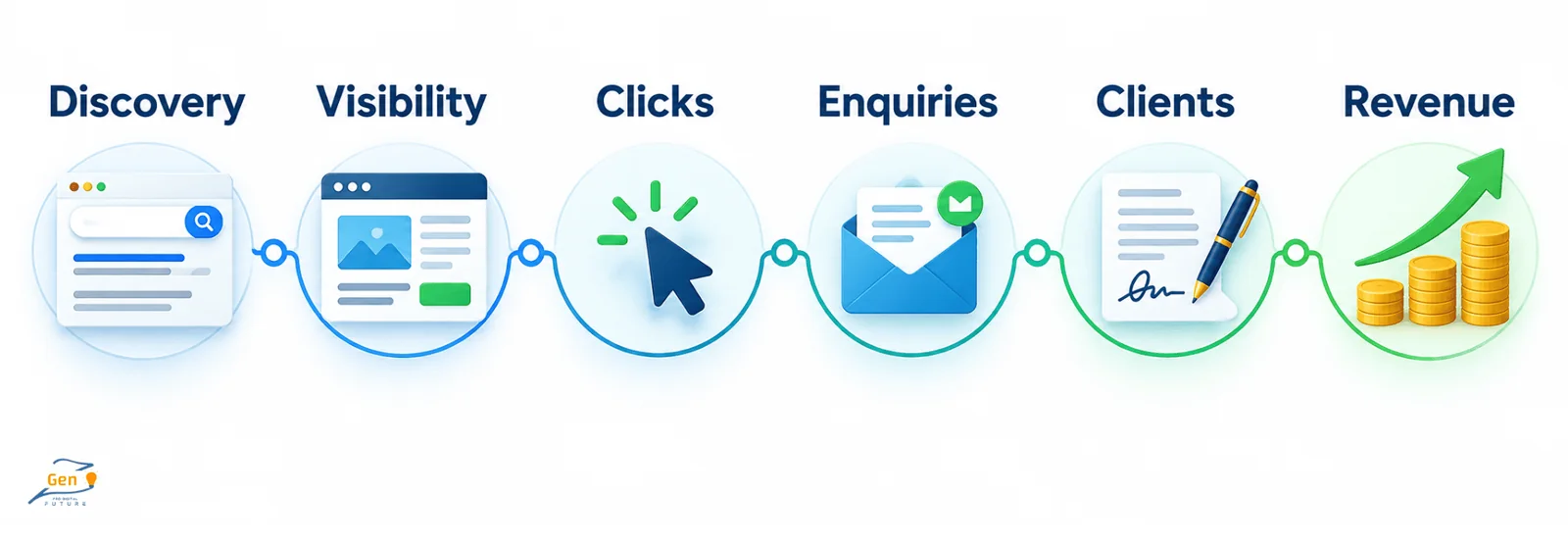
Figures from a well-planned SEO service matter when they show how a person moves from search to a signed project.
While researching this guide, I compared the usual impressions, traffic, keywords, and conversions with what our on-page and off-page teams see. One point kept coming up. A number can rise without helping the business, so judging if SEO is worth the investment cannot depend on one fixed month.
For a service company working towards $1 million in annual revenue, SEO success should follow a clear path:
Discovery → relevant visibility → qualified clicks → enquiries → signed clients → revenue
1. Google Finds and Indexes Your Important Pages
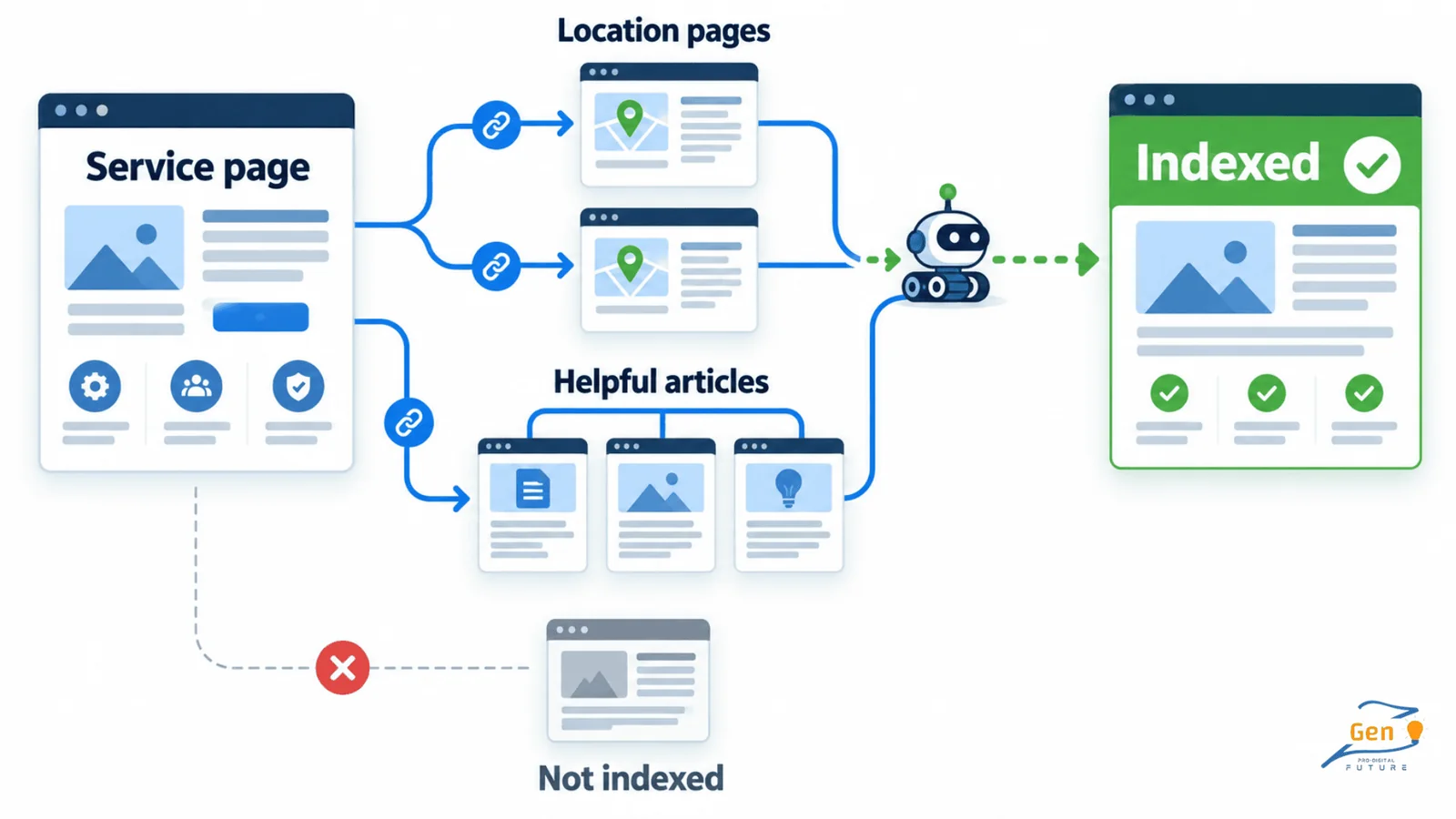
SEO cannot produce leads if Google cannot find the pages that explain and sell your services.
Our on-page SEO expert describes a healthy website as a tree. The main service page forms the trunk, related service and location pages form the branches, and supporting articles connect them. This gives visitors and search crawlers a clear route through the website.
Check new and updated URLs with the Google Search Console URL Inspection tool. It can confirm access and reveal a no index tag, canonical setting, or robots.txt problem that blocks discovery.
Indexing speed gives context, but it does not prove rankings or revenue. Our off-page team saw an interior design company backlink enter Google’s index in 11 days, yet they usually wait around three months before judging the full off-page result.
For each link, our team checks the topic, region, target-country traffic, spam level, and link type. They also review three third-party scores:
- Domain Authority or DA estimates the strength of the whole website.
- Page Authority or PA estimates the strength of the page containing the link.
- Domain Rating or DR focuses on the strength of the website’s backlink profile.
These scores run from 0 to 100. Higher numbers suggest greater strength, but they are not Google scores.
Our team looks for DA, PA, and DR scores of 50 or more, at least 500 target-country visits, a spam score below 4%, and a crawlable dofollow link. Relevance still comes first because a genuine regional or niche mention may help more than an unrelated high-scoring website.
Choosing the right SEO agency also means looking beyond high metrics.
Useful opportunities may come from project submission sites, niche publications, government resources, and credible news pages.
What to check
- Inspect every important URL in Google Search Console.
- Confirm that new pages appear in the Page Indexing report.
- Make sure each important page has at least one useful internal link.
- Record how long valuable pages and earned backlinks take to enter the index.
2. Relevant Impressions Rise Before Traffic Does
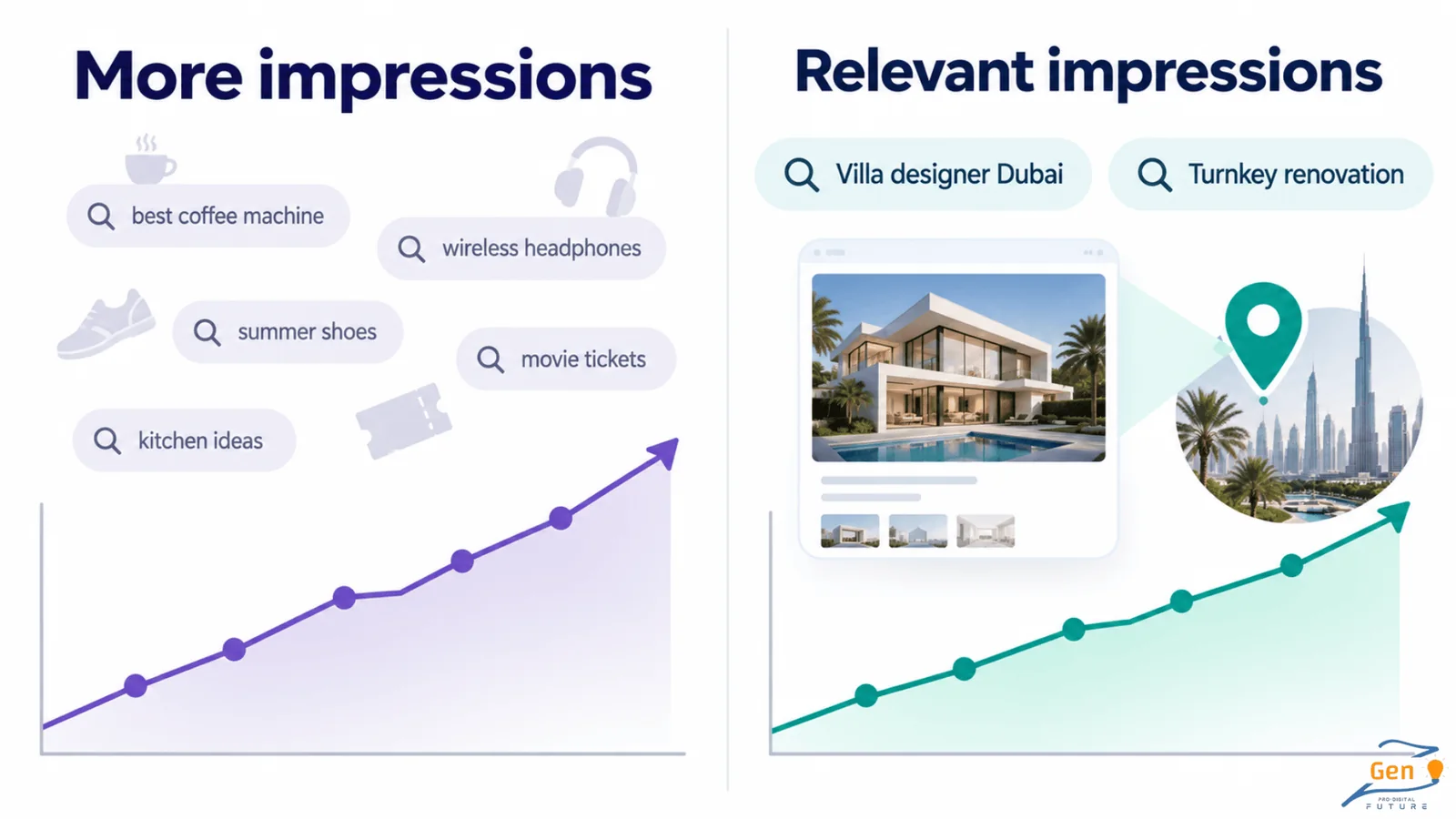
More impressions can show early progress, but only for searches that matter. Google’s Search Console Performance report shows clicks, impressions, click-through rate, and average position by query, page, country, and device.
Start by comparing the latest 28 days with the previous 28 days. Then look past the purple line and read the actual terms behind that growth.
For example, “Cost of living room interior design” may bring little value to a premium interior design firm. A rise for “villa interior designer Dubai” or “turnkey villa renovation company” shows stronger buying intent.
While reviewing SEO reports, I noticed one article could appear for hundreds of broad informational searches and lift the visibility graph. I realised why that graph can mislead a business owner. If those searches have no connection to the service or buying intent, the growth has little commercial value.
To understand the change properly:
- Compare equal 28-day or three-month periods.
- Separate branded searches from non-branded ones.
- Filter the report by the countries and cities you serve.
- Group queries by informational, commercial, and transactional intent.
- Look for growth around your services, customer problems, and locations.
Relevant impressions are an early sign your SEO is working, but only when the right people see your pages.
3. Commercial Pages Climb for Buyer-Led Searches
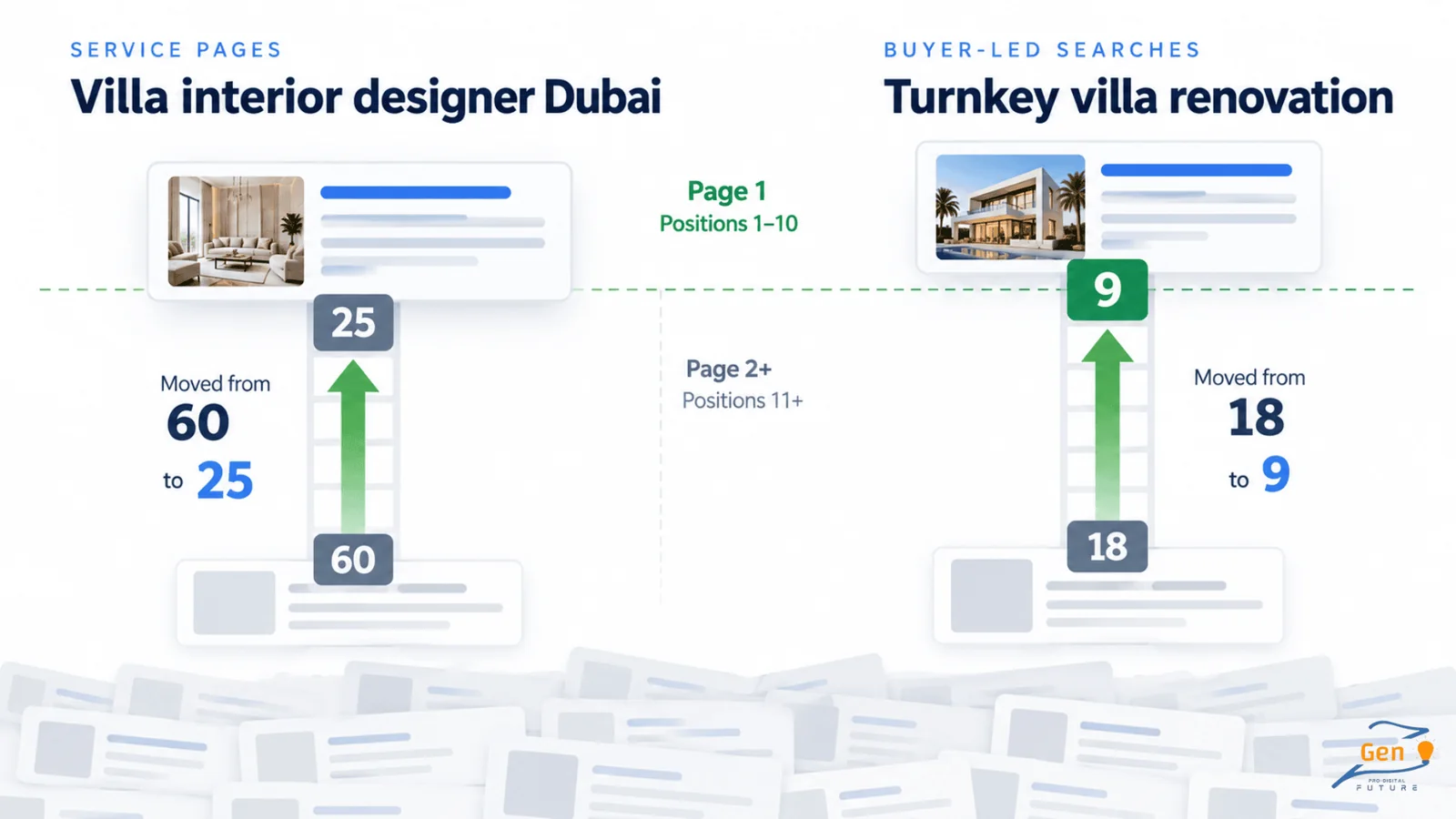
Keyword growth becomes useful when service and decision-stage pages move for terms that can produce enquiries. Ten useful terms may matter more than 500 unrelated ones, so track each page with the query that brings it into search.
A site-wide average may fall when Google starts showing new pages at lower positions, even if your important pages remain steady.
Focus on service pages, location pages, comparisons, pricing content, and case studies because they sit closer to an enquiry. Moves from position 60 to 25 or 18 to 9 both show progress.
Your content structure also starts showing its value at this stage. Supporting articles should connect to one main service or pillar page. Our guide to SEO for service-based businesses explains how those relationships work.
For off-page SEO, our team seeks regional, niche, project submission, government, and credible editorial opportunities. A backlink offers little value when its country, topic, and audience have no connection to the buyer.
Focus on these checks each month:
- Track commercial pages together with their target queries.
- Review useful terms sitting between positions 11 and 25.
- Check that supporting articles link to the correct service page.
- Compare movement with seasonal demand, site changes, and search updates.
4. The Right People Click and Take Small Actions
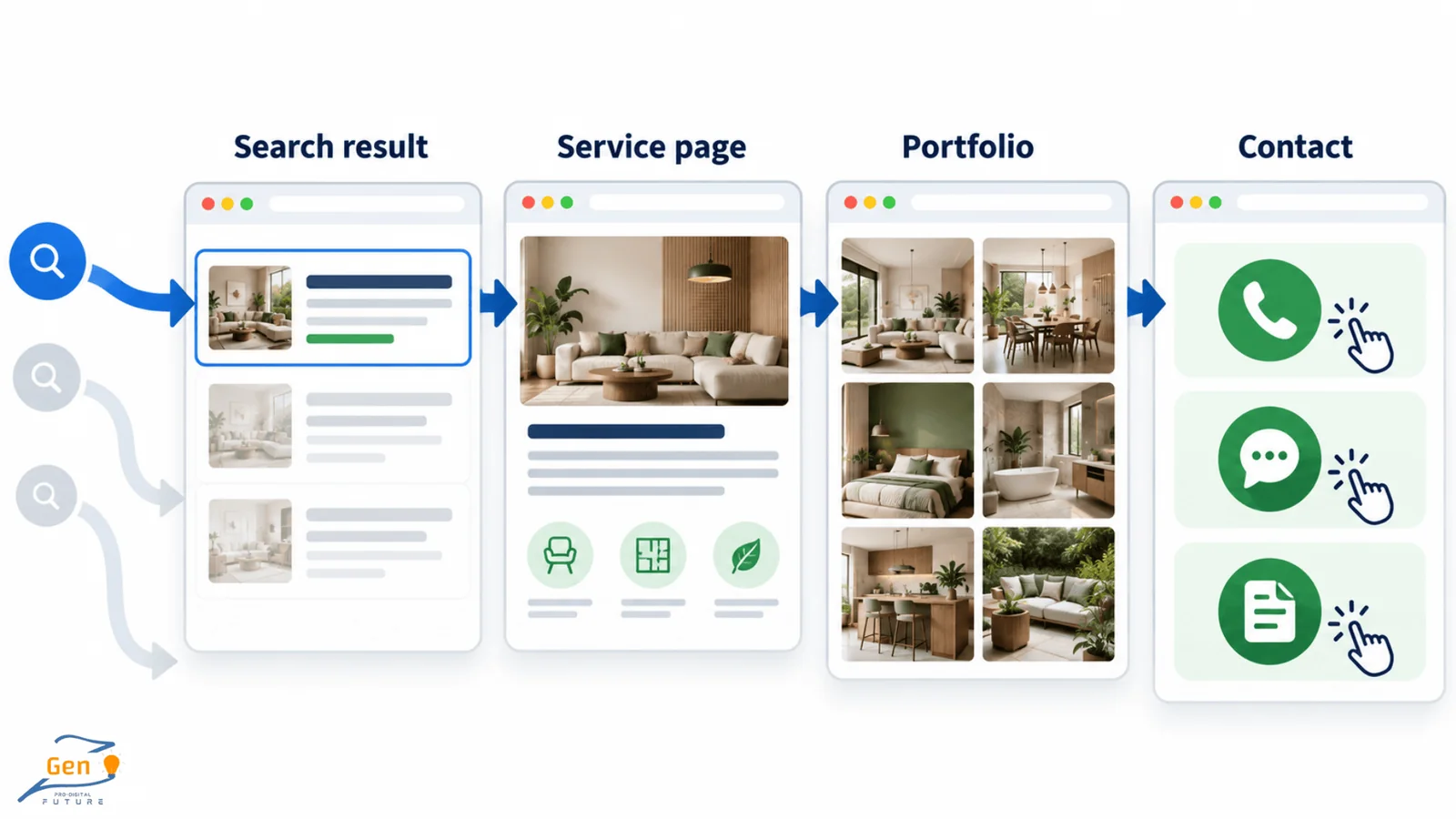
Clicks become meaningful when visitors continue towards a service, portfolio, or contact page. A rising click-through rate may mean your title and description now match the search more closely.
But you still need to compare similar queries and positions. A page moving from position 20 to 6 will usually gain clicks, even with the same title.
Next, check if visitors view a service page, open the portfolio, tap the phone number, use WhatsApp, or begin a form. These actions show movement through the buying journey.
Time on page and bounce rate cannot prove intent. Someone may read one answer, call through the header, and leave, while another person stays for five minutes without any plan to buy.
The stronger pattern appears when relevant clicks rise and more visitors reach a commercial page or contact action.
You can follow that movement by checking:
- Clicks and CTR for the same pages and query groups
- Organic landing pages in GA4
- Phone taps, WhatsApp clicks, form starts, bookings, and downloads
- Articles that help visitors reach service and contact pages
5. Your Brand Appears in Search and AI Answers
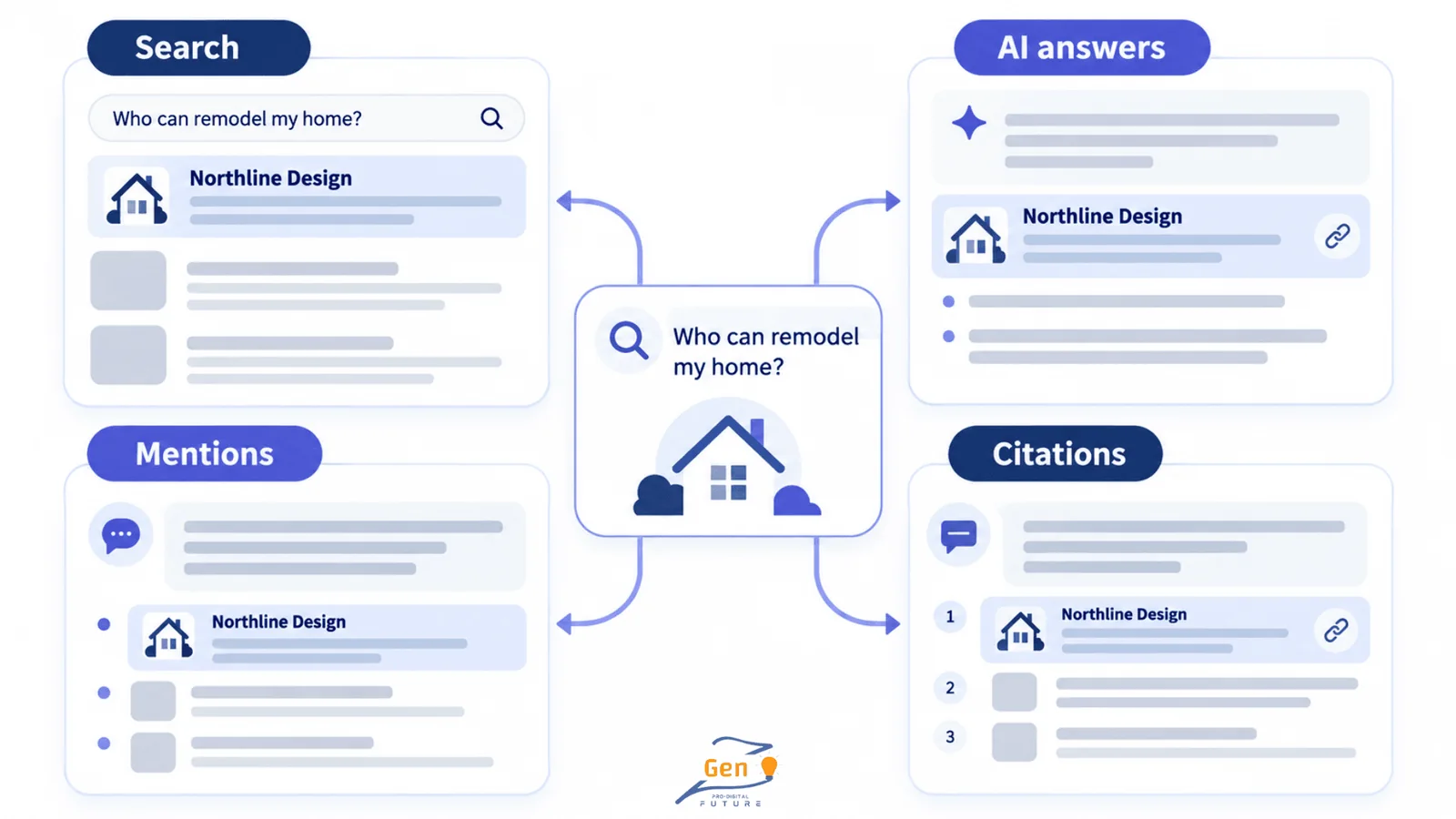
Modern search visibility includes Google results and answers from AI Overviews, AI Mode, ChatGPT, and Perplexity.
The newer terms sound technical, but their basic roles are simple:
- SEO helps search engines find, understand, and rank your pages.
- AEO makes clear answers easier for answer engines to extract and present.
- GEO improves the chance of your brand or content appearing in generative AI answers.
These areas overlap. Google confirms that existing SEO practices also apply to AI Overviews and AI Mode, with no special AI schema required. Pages still need to be accessible, indexed, useful, and connected through internal links.
Early research supports GEO, although no method can guarantee a citation. In a KDD 2024 study listed by Princeton University, Pranjal Aggarwal and five co-authors reported gains of up to 40%. Results changed by topic, so that figure will not apply to every website.
To measure this area, test a fixed list of buyer questions across the AI tools your audience uses. Record brand mentions, cited pages, competitors, and referral visits. One mention proves little because answers change, but repeated visibility across buyer-led prompts gives a stronger signal.
6. Qualified Organic Leads Begin to Arrive
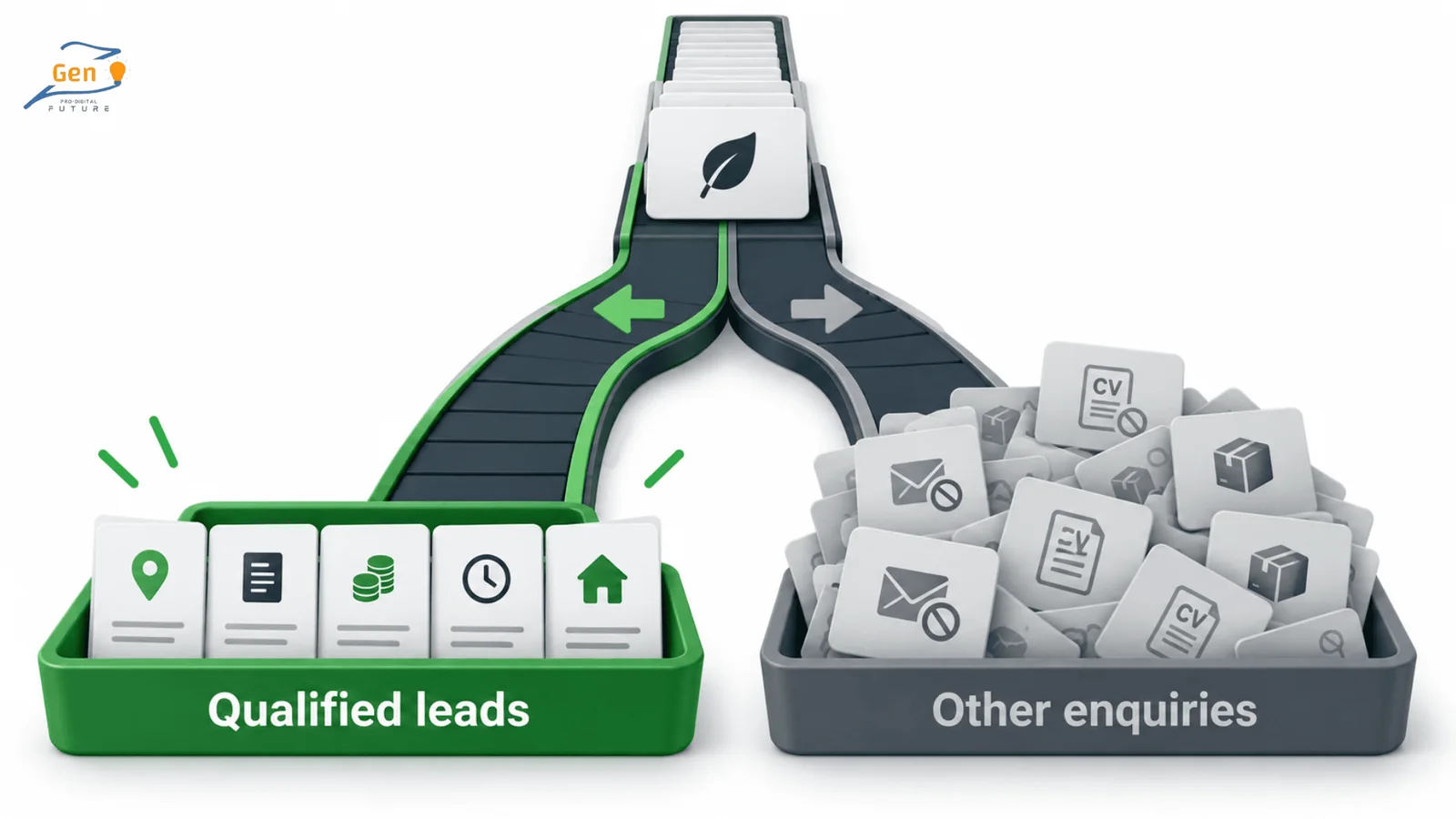
Suitable enquiries are among the clearest signs your SEO is working for a service business.
A form submission does not automatically count as a qualified lead. Consider the person’s location, required service, budget, timeline, and decision-making role.
Five suitable enquiries may bring more value than 100 spam forms or job requests. That is why lead quality matters so much for a service business.
I spoke with our SEO team about when they normally notice this change. In less competitive markets, qualified organic leads may begin around the third month. Tougher campaigns can take closer to six months because more businesses are competing for the same buyers.
Website history, the offer, competition, and execution can change that timeline. Lead growth still requires the right pages, search intent, and conversion path to work together.
For a clearer view, record:
- Calls, forms, chat enquiries, and consultation bookings
- The original source of each enquiry in your form or CRM
- The service, location, budget range, and outcome of each lead
- Spam, vendor messages, job requests, and other invalid contacts separately
This separates potential customers from empty activity.
7. Organic Search Starts Influencing Revenue
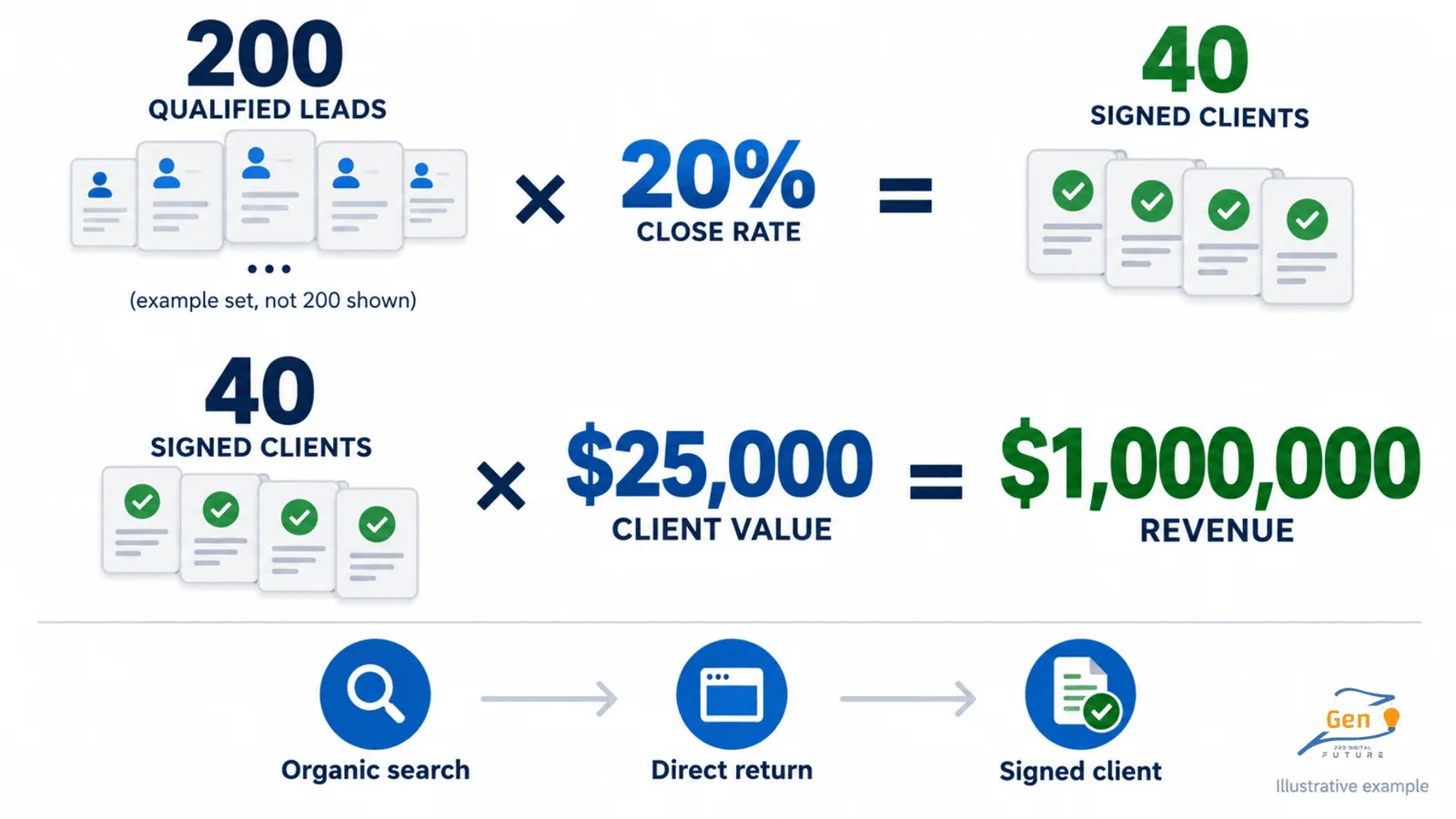
Revenue connects SEO activity with signed work.
You can begin with a simple model:
Qualified organic leads × close rate × average client value = estimated organic revenue
Suppose a service business wants to reach $1 million in yearly revenue. If each signed client is worth $25,000, the company needs 40 clients.
With a 20% close rate, it would need about 200 qualified leads per year, or roughly 17 each month. This example is not a forecast or guarantee. Your client value, capacity, sales cycle, and close rate will change the result.
The calculation shows why rankings and traffic must connect to sales. Easy keywords cannot show how much business SEO helped create.
Use first-touch and assisted-conversion data because a buyer may find an article through Google, return through a branded search, and contact the company directly. Counting only the final visit may hide SEO’s role.
Organic search is supporting growth when those leads become signed clients and the acquisition cost remains sustainable.
If you are comparing channels, our SEO vs Google Ads guide explains how their costs, timelines, and returns differ.
When the Signs Your SEO Is Working Usually Appear
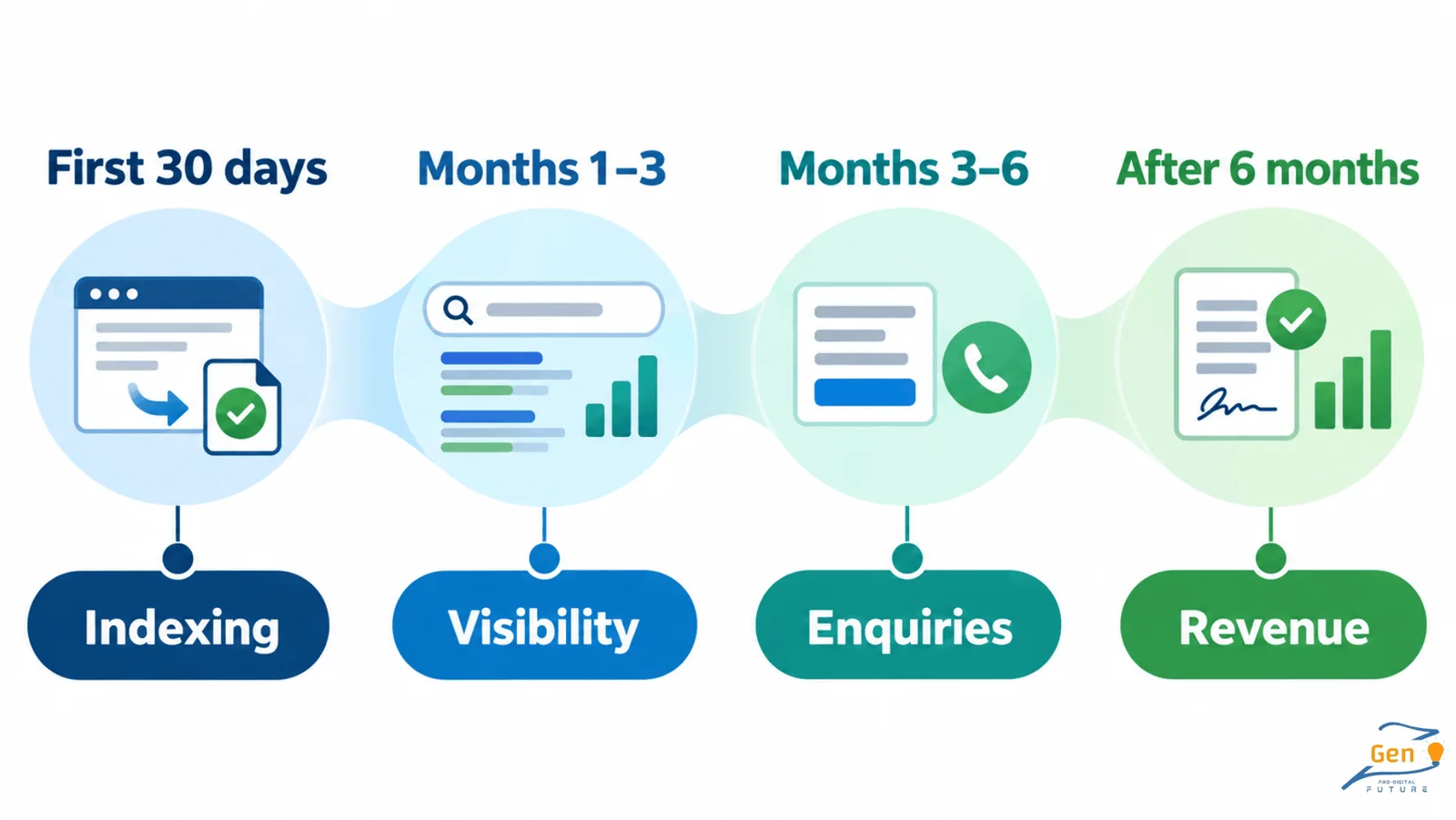
These signals arrive at different stages.
| Period | What you may see | What it means |
|---|---|---|
| First 30 days | Technical fixes, clearer internal links, and important pages entering the index | Search engines can access the new foundation |
| Months 1 to 3 | Relevant impressions, more buyer-led queries, indexed links, and early clicks | Visibility is growing among a more useful audience |
| Months 3 to 6 | Commercial ranking movement, qualified traffic, and the first suitable enquiries | Search visibility is beginning to affect demand |
| After 6 months | More consistent leads, assisted conversions, and revenue data | You can judge commercial performance with stronger evidence |
Lower competition can shorten this path, but a new website or difficult market may need more time. If discovery, relevant impressions, and useful query movement remain flat, investigate the strategy instead of waiting blindly.
Read the Pattern, Not One Green Number
When reviewing the signs your SEO is working, one metric cannot prove success. You need to see how the signals connect.
- Impressions rise but clicks stay flat may point to weak positions, poor titles, or irrelevant queries.
- Traffic rises but enquiries stay flat may show a problem with intent or the conversion path.
- Leads rise but revenue stays flat may expose weak lead quality, pricing, or sales follow-up.
- AI mentions rise but suitable buyers do not arrive means visibility has not become commercial demand yet.
This wider view tells you what to fix next, so you can work on the weak step instead of publishing more content without a reason.
Measure the Path From Search to Revenue
The seven signs your SEO is working should form one clear story, from page discovery to signed work.
Your pages become easier to find, and they start appearing for relevant searches. Those pages then earn qualified clicks and bring suitable prospects into the sales process. Over time, search and AI visibility should help create real revenue.
Rankings still matter, but they are only one part of that process. A service business cannot work towards $1 million in yearly revenue with impressions alone. It needs organic search to create qualified demand and help turn that demand into signed projects.
Our review of Dubai SEO companies that focus on revenue can also help you judge provider claims.
If your reports show activity but cannot connect it to suitable enquiries, GenzPro can help you find the weak step. We build SEO, AEO, and GEO strategies for service businesses that want measurable growth from search.
Questions this page invites.
How long does it take to see signs your SEO is working?
Indexing, relevant impressions, and keyword movement may appear within one to three months. Qualified leads often begin between months three and six, but the timing depends on competition, website history, the offer, and the quality of the work.
Can SEO be working before my pages reach page one?
Yes. Google may first index more pages, show them for relevant searches, and move commercial terms into the top 20. The stronger proof appears when that visibility starts producing qualified clicks, suitable enquiries, and signed clients.
Which SEO metrics matter most for a service business?
Start with indexed commercial pages, relevant non-branded impressions, buyer-led keyword movement, qualified organic clicks, and enquiries. Then connect those enquiries to signed clients and revenue instead of judging success through total traffic alone.
How can I tell if an organic lead is qualified?
Record the lead's location, required service, budget, timeline, and decision-making role. Separate suitable prospects from spam, job requests, and vendor messages because a smaller group of relevant enquiries can be more valuable than a large lead total.
How do I measure SEO visibility in AI answers?
Test a fixed list of buyer questions in Google AI Overviews, AI Mode, ChatGPT, and Perplexity. Record brand mentions, cited pages, competitors, and referral visits, but look for repeated visibility because one answer can change quickly.
My impressions are rising but clicks are flat. Is my SEO working?
It can be an early sign, but it needs a closer look. Flat clicks next to rising impressions usually point to weak positions, titles and descriptions that do not match the search, or queries that are not relevant to your service. Check the actual search terms behind the impressions and the average position of your commercial pages before deciding.
Do better rankings alone mean my SEO is working?
Not by themselves. A ranking only matters when the search has buying intent, the right people click, and your page turns that visit into an enquiry. A page can climb for a term few customers use and still bring no business. Follow the full path from ranking to qualified clicks, suitable enquiries, and signed clients instead of judging success on position alone.
Which free tools can I use to check if my SEO is working?
Google Search Console shows impressions, clicks, average position, and which pages appear for which searches, and it now reports AI Overview and AI Mode visibility. Google Analytics shows organic landing pages and actions like form starts and calls. Together they let you connect search visibility to enquiries without paid tools, as long as your tracking is set up correctly.

Unlock $1M/Year revenue with Organic traffic for your business.
What we've learned from running organic growth programs in Dubai.
No promotional copy, no link bait.
Related articles

Do you want to grow your revenue with organic traffic?
Answer 10 question we'll audit your site to build custom seo funnel and tell you what exactly you need to do to grow your revenue from SEO traffic.