
SEO vs Google Ads for Service Business in 2026: Which One Gives Better ROI?

Summary of this ArticleKnow what's in this article
SEO and Google Ads both bring enquiries, but they spend your money in very different ways. Google Ads buys fast visibility and fits urgent demand when your gross profit can carry the cost per click. SEO builds pages that keep earning organic leads over time, so it suits research heavy, high value services once you can fund the build period. Compare both over the same period using qualified leads and gross profit rather than traffic, and run both when each has a clear job and enough budget.
Smartly summarized from full article, need to know more Talk to a growth expert at GenzPro
SEO vs Google Ads can both bring enquiries, but they ask you to spend money in very different ways. Most comparisons pick a winner too early, which does not help a service-business owner dealing with payroll, delivery costs and a real sales target. This practical lens is how Genzpro weighs the choice for a service business.
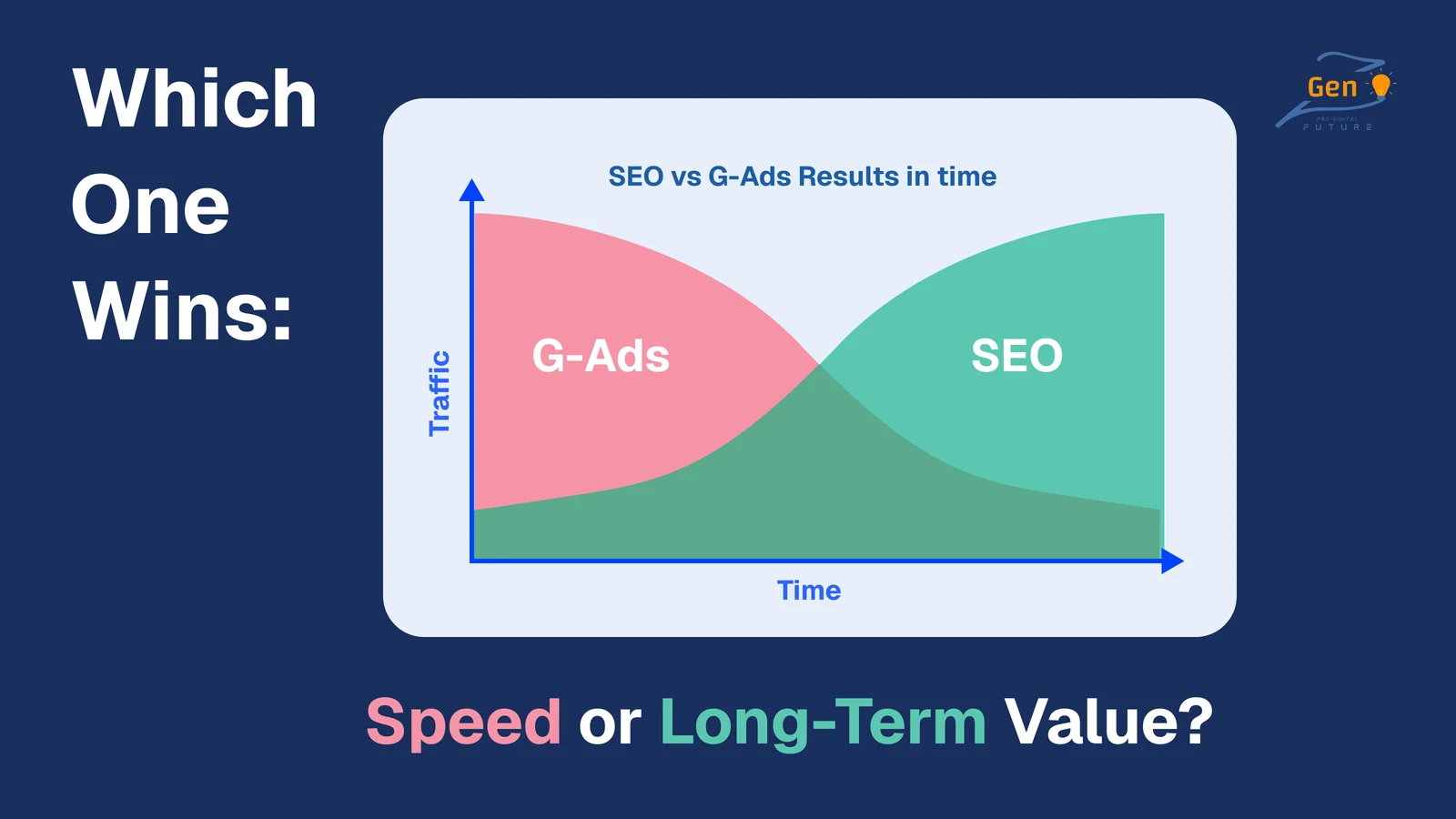
Google Ads can put your service in front of active searchers quickly, but you pay for each visit. SEO takes longer because your website has to earn useful positions, yet a strong page can keep attracting potential customers after the main work is complete.
The right choice will be determined by your gross profit, close rate, sales cycle, available budget and actual search demand. This guide uses those facts to compare cost, speed, and long term value.
Read on to see which channel fits your business now and when using both has a sound business case.
SEO vs Google Ads

For a business owner, the decision comes down to how quickly the investment must produce customers and how long the business can wait.
Google Ads rents search visibility while SEO builds a search asset on your website.
Ads usually win when speed and control matter. SEO can produce more lasting value because a useful page may keep earning unpaid visits, but only if people search for the service and the site can reach strong positions.
You own the page, not its Google position, so SEO still needs care. Ads give you a faster route to existing demand, but paid visits need an active budget. Neither channel is automatically cheaper. The better investment brings qualified customers within a cost and timescale your business can carry.
What SEO Builds for a Service Business

SEO helps your pages appear in Google’s unpaid search results when people look for the services you provide.
The work may include site repairs, search research, service pages, useful answers and signs of trust. Google does not charge for an organic click, but the work costs money. Its guide to how Search works confirms that payment cannot buy a higher organic position.
The value sits in the pages and proof you build. SEO only compounds when the visitors match the service and turn into qualified enquiries. More traffic alone does not make the investment work.
What Google Ads Buys for a Service Business

Google Ads lets you pay to compete for sponsored positions when people search for selected services.
You can choose locations, schedules, budgets and landing pages, and visits may begin soon after approval. Paying more does not guarantee the top position or a good lead. Google says Ad Rank considers the bid, ad quality, landing page experience and search context.
Most importantly, the click is the product you buy. That person may become a good customer, a poor fit or no enquiry at all. Your offer, page, proof and response process must do the rest.
How Google Ads Turns Search Visibility Into Revenue

Ads can create activity quickly, but the campaign only succeeds when paid visits become profitable work.
You Pay for the Visit Before You Know Its Value
A cheap click wastes money when the searcher wants the wrong service, while an expensive one may make sense when it leads to a profitable client. Click price cannot act as the final score.
Review the actual searches that triggered ads, then follow each enquiry through the sales process. Google’s qualified and converted lead guidance lets a business distinguish early enquiries from leads that move further towards a sale.
Cost per Lead Needs the Full Campaign Cost
Use these two calculations:
Google Ads cost per lead = total campaign cost divided by tracked leads
Cost per qualified lead = total campaign cost divided by qualified leads
Include media, management, tracking and landing page work. The second figure matters more because spam, wrong service requests and out of area callers are not real sales opportunities. Cost also changes with competition, bids and conversion rate.
A Useful Test Needs Enough Money
Google sets no universal starting budget. Review local demand and estimated click costs, then work backwards from the visits needed for a useful test. Keyword Planner provides estimates, although budgets, bids, locations and market behaviour affect forecasts.
Here is a simple illustration, not a market benchmark. At $20 per click, 100 visits require $2,000 in media spend before management, tracking and page costs. If your budget can buy only a handful of visits, one weak week may tell you very little.
The Business Must Be Ready Before the Campaign Starts
You need a clear service, defined area, matching page, working tracking and prompt replies. Staff should mark each enquiry as qualified, lost or sold. Google explains how later sales can feed back into campaigns through offline conversion tracking.
If you pause the campaign or use its budget, fresh paid visits stop. Past visitors may return, but the campaign will not supply new clicks for free. Plan the ongoing media cost before launch.
Return Follows the Sales Cycle
Ads can bring a visit on launch day, but that does not mean it brings profit on launch day. An urgent home service may close during the first call, while an interior project or consulting engagement can require meetings, proposals and approval.
Measure the time from ad spend to collected gross profit. A promise of instant ROI means little before you know click cost, lead quality, close rate and the normal time to complete a sale.
Google Ads Can Give SEO Better Starting Data
Search term, location and lead data can guide future SEO pages while Ads covers important searches during the build period. Paid and organic visitors may act differently, so treat the findings as direction, not proof.
Ads does not lift an organic position. Google Search Central states that advertising has no effect on a site’s presence in organic results.
Google Ads Works Best Under Clear Conditions
A Google Ads test makes sense when buyers already search, enquiries are needed soon and one sale leaves enough gross profit to carry acquisition cost. It can also test a new area or offer.
Hold the spend when the page gives people no clear reason to enquire, tracking cannot connect leads to sales or the team follows up slowly. More paid traffic will expose those problems and may make them more expensive.
How SEO Builds Value Over Time

SEO starts more slowly because Google needs a reason to show your pages ahead of other useful options.
Google Needs Useful Pages and Signs of Trust
Google aims to show pages that answer the search and come from a source people can trust. Its people first content guidance asks site owners to create useful and reliable information for people.
For a service business, that usually means clear service pages, evidence of real work, accurate advice, sensible site structure and a good mobile experience. Broad articles alone will not fix a weak core offer.
SEO Compounds When the Same Work Keeps Earning
One useful page can appear for related searches and improve as the business learns. Google does not charge for each organic visit, so later leads can lower average acquisition cost. Rankings move and pages need updates, but the work does not reset after every click.
One genuine Genzpro example shows this pattern, not a promise. A luxury interior company started with 140 organic visits and two qualified leads a month. Its published results later showed more than 2,500 visits and 50 to 60 qualified leads each month, and the company stopped Ads in month seven. The market, website and execution shaped that result.
SEO Cost per Lead Changes as the Asset Grows
Use this calculation:
SEO cost per qualified lead = total SEO cost divided by qualified organic leads
Include research, content, technical work, tools and maintenance. Early figures can look poor because the build comes before many leads. The average may fall as pages produce enquiries, but it can rise if positions drop.
An SEO company should connect organic activity with qualified leads and sales. Rankings and traffic help with diagnosis, but they do not settle the business case.
SEO Needs Demand and a Realistic Opening
Confirm that people search for the service where you sell, then inspect the current results. You need a realistic route to compete, site access, proof, tracking and time for maintenance.
In a competitive market such as Dubai, a plan may need strong service pages, local evidence and coverage of commercial searches. Broad educational content on its own may attract readers who never plan to buy.
SEO Return Needs Time to Develop
“For planning, we ask many high-ticket service businesses to prepare for a six to eight month build period before judging the full SEO direction. Some see leads earlier, but competition, the website, the target searches and the sales cycle can move that date,” says Rahul Kumar, Co-founder and Marketing Strategist at Genzpro.
That range guides planning and does not guarantee a result. A new site may need longer, and the sales cycle adds time after visibility appears. Ask what the team will build and which early signs would support, change or stop the plan.
SEO Works Best When Buyers Research
SEO suits services where buyers compare providers and seek proof before making contact. It becomes harder to justify when few people search, the offer may change, the results leave no realistic opening or revenue is needed next month.
A responsible SEO service in Dubai or any other market should say when those limits make SEO a poor investment. That advice matters before a long contract starts.
SEO vs Google Ads Using the Same Business Math

A fair comparison starts with customer value and follows both channels to profit over the same period.
Begin With What One Customer Is Worth
Start with gross profit, not revenue, because delivery costs reduce what the business can spend to win a customer. Here is an illustrative example.
A consulting company collects $20,000 from a project and spends $8,000 to deliver it, leaving $12,000 in gross profit. If the owner spends 25 percent of that profit to acquire a client, the limit is $3,000. With one in four qualified leads becoming a customer, the business can afford $750 per qualified lead.
That creates a decision rule. A channel above $750 needs better conversion or lower cost. One below the limit may deserve more investment once lead quality remains steady.
Put the Waiting Period Into the Budget
Ads need media money for every active month. SEO needs funding before the return becomes clear. Compare both over one period, including management, content, technical work, page work and tracking.
A one month Ads test beside a twelve month SEO plan will distort the answer. Include the time from the first payment to collected gross profit, because a long sales cycle can make a promising campaign look weak too early.
First Page Sage’s comparison of SEO and paid search reports an average ROI of 748% for SEO and 36% for paid search. The report describes paid search as paying Google for sponsored search positions, which makes the findings relevant to Google Ads. It also lists an average conversion rate of 2.4% for SEO and 1.3% for paid search. According to the company, Google Ads can generate traffic and leads sooner, but SEO may deliver a stronger return over a longer period. These figures come from First Page Sage’s own research, so businesses should use them as general benchmarks instead of expected results.
Compare Customers and Profit Instead of Traffic
SEO traffic and paid clicks are not equal outcomes. Follow each channel through visits, enquiries, qualified opportunities, closed customers and gross profit. Then compare customer acquisition cost, payback time and total profit.
Ads can reach urgent buyers, while poor targeting attracts weak calls. SEO may bring informed prospects, yet broad pages collect casual readers. The sales result shows which attention helped.
Choosing Which Channel Goes First
Start with Google Ads when demand is urgent, buyers already search and the acquisition limit can carry paid clicks. SEO should go first when customers research, the organic results leave a realistic opening and the business can fund the build period.
If both look suitable but the conversion rate remains unknown, a controlled Ads test can provide faster evidence. Where neither route has dependable tracking, a clear page and a working follow up process, fix those basics before buying more traffic.
| Factor | SEO | Google Ads |
|---|---|---|
| Basic model | Build pages and earn organic positions | Pay to enter ad auctions |
| Speed | Usually takes months | Visits can begin after approval |
| Direct click charge | Google does not charge for organic clicks | The advertiser commonly pays per click |
| Ongoing cost | Maintenance and improvement | Media budget management and testing |
| Control | Less control over position and timing | Strong control over budget location and schedule |
| Lasting value | Strong pages may keep earning visits | New paid visits depend on an active campaign |
| Main risk | Spending before useful positions arrive | Paying for clicks that do not become customers |
| Best early use | Research led demand and a longer horizon | Urgent demand launches and market tests |
Choosing the Right Route for Your Service Business

If you own a clinic, legal practice, consultancy, interior business or premium home-service company, your customers will not all search or buy in the same way. The right mix also depends on your model, which our guide to SEO for service-based businesses breaks down by business type.
Google Ads Suits Urgent and Testable Demand
Paid search often fits emergency legal needs, urgent home services, treatments with clear demand and new market tests. The buyer already knows what they need and may contact a provider quickly. Good margins, focused locations and prompt call handling make the test more useful.
SEO Suits Research and Trust Heavy Decisions
Interiors, consulting, planned legal services, elective clinics and premium home projects often involve comparison. Buyers want to see experience, answers, case studies and a clear process before they speak to anyone. SEO can meet those needs across several pages and support the trust required for a high value decision.
A review from an SEO company in Dubai can show how this analysis works in a competitive market, but the same checks should use the demand and search results in your own sales area.
Many High Ticket Businesses Can Use Both
The two channels can work together when each has a clear task. Ads can cover urgent searches and test messages, while SEO develops pages for people who need more time. Shared tracking then shows which searches create qualified opportunities.
Do not divide a small budget simply because both channels sound useful. Fund one well enough to learn, then add the second when the numbers support it and the business can manage both properly.

The Final Answer for SEO vs Google Ads
SEO is the stronger long term investment when buyers research, valuable searches exist and your business can support the build period. The pages you create may keep bringing qualified enquiries, so acquisition cost can fall as the work earns over time.
Google Ads is the better first move when speed matters, demand already exists and your gross profit can carry the cost of paid clicks. It can also test an offer before a larger SEO plan.
Use both when each has a clear job and enough budget. If the website, tracking or follow up process is weak, fund neither yet. Fix that route first, then choose the channel that can produce a customer within a cost and timescale your business can carry.
See Which Channel Has the Stronger Case
Genzpro can review search demand, competition, customer economics and the condition of your website. We will say so when SEO has no sensible route to payback. You will also hear when Ads offers the better first test.
Request a search investment review to see which channel fits your budget and payback timeline.
Questions this page invites.
Is SEO cheaper than Google Ads?
SEO can become cheaper per qualified lead, but there is no general rule. It carries research, content, technical, and maintenance costs before the return is clear. Ads carry media, management, tracking, and page costs. Compare both over the same period, and use qualified leads or customers as the result instead of visits.
Do Google Ads help SEO rankings?
No. Advertising does not improve or damage a page's organic position. Ads can still support an SEO plan by showing which searches, locations, and offers lead to good customers. That data can guide decisions, but the website must earn organic visibility through useful pages and other search signals.
Can a small service business use SEO and Google Ads together?
Yes, if the budget can fund both properly and each channel has a clear job. Ads may handle immediate demand while SEO develops. A business with limited funds may learn faster by focusing on one route first because two underfunded campaigns can produce weak data and little progress.
What should I fix before spending on either channel?
Clarify the service, target area and reason a customer should choose the business. Make sure the page works on mobile, calls and forms feed into tracking, staff respond promptly, and the sales team marks every enquiry as suitable or unsuitable. More traffic can create more waste when that path breaks.
Should I choose SEO or Google Ads first?
Start with Ads when you need demand soon and your margins can carry paid acquisition. SEO should go first when buyers research, valuable organic positions look achievable and the business can wait. If you lack reliable numbers, test one channel at a useful level before dividing the budget between both.
What is the fairest way to compare SEO and Google Ads?
Set the same measurement period and include every cost. Follow each channel from visit to enquiry, qualified opportunity, customer and gross profit. Then compare customer acquisition cost, payback time and total profit. This prevents you from comparing SEO traffic with Ads leads or a short test with a long plan.
How long does it take for SEO and Google Ads to show results?
Google Ads can bring visits soon after your campaign is approved, though those visits only pay off once they become qualified enquiries and sales. SEO usually takes longer because your pages have to earn useful positions first. For many service businesses that means planning for six to twelve months before judging SEO, while Ads can cover demand in the meantime. Your market, website, and sales cycle move both timelines.
Do AI Overviews change the SEO vs Google Ads decision?
They change where clicks go, not the basic choice. AI Overviews can take some clicks away from standard organic results, so getting cited in them matters alongside normal rankings. Google Ads still appear separately and keep working as long as you fund them. Track rankings, AI citations, paid clicks, and enquiries together so you can see which channel is actually bringing customers.

Unlock $1M/Year revenue with Organic traffic for your business.
What we've learned from running organic growth programs in Dubai.
No promotional copy, no link bait.
Related articles

Do you want to grow your revenue with organic traffic?
Answer 10 question we'll audit your site to build custom seo funnel and tell you what exactly you need to do to grow your revenue from SEO traffic.